

STEER Outcomes
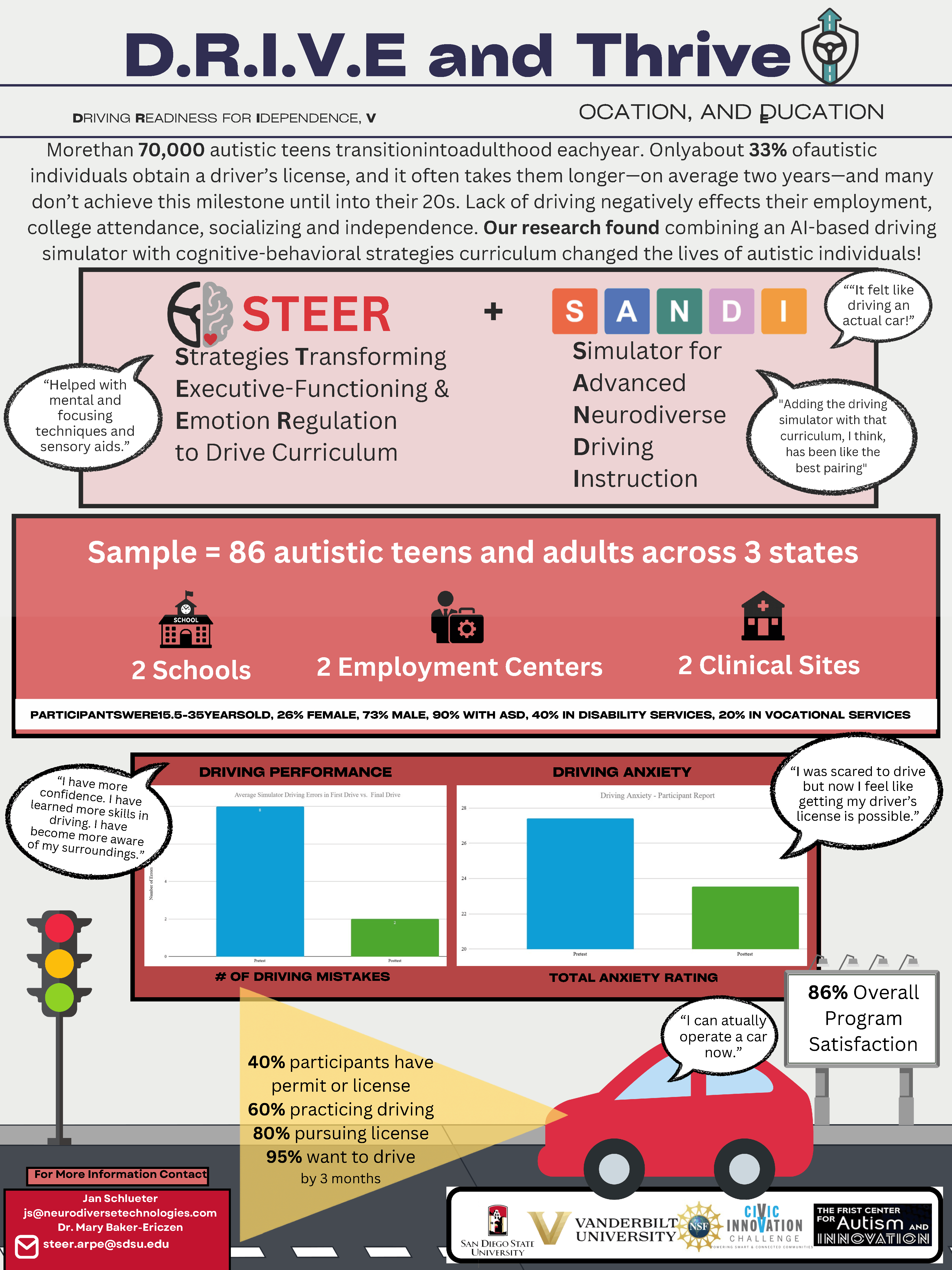
Inforgraphic Text and Data
Overview
More than 70,000 autistic teens transition into adulthood each year. Only about 33% of autistic individuals obtain a driver’s license, and it often takes them longer—on average two years—and many don’t achieve this milestone until into their 20s. Lack of driving negatively effects their employment, college attendance, socializing and independence. Our research found combining an AI-based driving simulator with cognitive-behavioral strategies curriculum changed the lives of autistic individuals!
The Intervention
The program combined:
- STEER: Strategies Transforming Executive-Functioning and Emotion Regulation to Drive.
- SANDI: Simulator for Advanced Neurodiverse Driving Instruction.
Participants and sites
- 86 autistic teens and adults across three states
- Two schools
- Two employment centers
- Two clinical sites
Driving outcomes after three months
- 40% had a permit or driver’s license.
- 60% were practicing driving.
- 80% were pursuing a license.
- 95% wanted to drive.
- Overall program satisfaction was 86%.
Driving performance
The average number of simulator driving errors decreased from approximately 7 before the program to 2 after the program.
Driving anxiety
The average participant anxiety rating decreased from approximately 27 before the program to approximately 23.5 after the program.
Participant feedback
I was scared to drive, but now I feel like getting my driver’s license is possible.
Contact Information
Jan Schlueter
js@neurodiversetechnologies.com
Dr. Mary Baker-Ericzen